Singapore Math
Competition Program (CP)
Age Group:G1-G6
Class Format:
- In-person
- Once a week;90-min in total (including a 5-min break)
- Small group of 1–5 students
CP Program Overview
- Foundation and Focus
- Based on international mathematics competitions.
- Develops mathematical analysis skills through competition-style questions.
- Goals
- Guides students to form efficient problem-solving habits for competition success.
- Builds competence and confidence for gifted education programs and international math contests.
- Key Benefits
- Prepares students for outstanding results in prestigious competitions.
- Enhances acceptance rates into Ivy League and other top universities.
Key Features
90-Minute Focused Lessons
Each class provides sufficient time for concept learning, guided practice, and problem-solving.
Small-Group Classroom Learning
Small class sizes allow for personalized instruction and closer teacher support.
Structured Learning Materials
Lessons are supported by well-designed textbooks and interactive teaching slides.
Competition-Level Practice
Students work with selected competition-style problems to strengthen analytical thinking.
Core Mathematical Concepts
CP1 Learning Focus
Spatial Reasoning – Tangram puzzles, symmetry, and paper folding to develop visualization skills.
Number Sense & Arithmetic – Addition, subtraction, multiplication, and division with efficient strategies.
Pattern Recognition – Finding patterns in figures and numbers to build logical thinking.
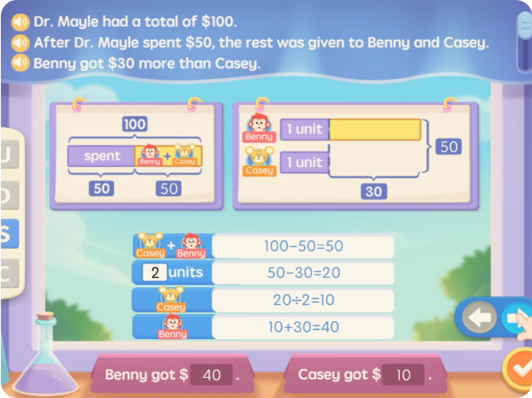
Word Problem Solving – Model drawing, working backwards, and structured problem-solving methods.
IQ & Logic Puzzles – Sudoku, grid games, and optimization problems to strengthen analytical thinking.
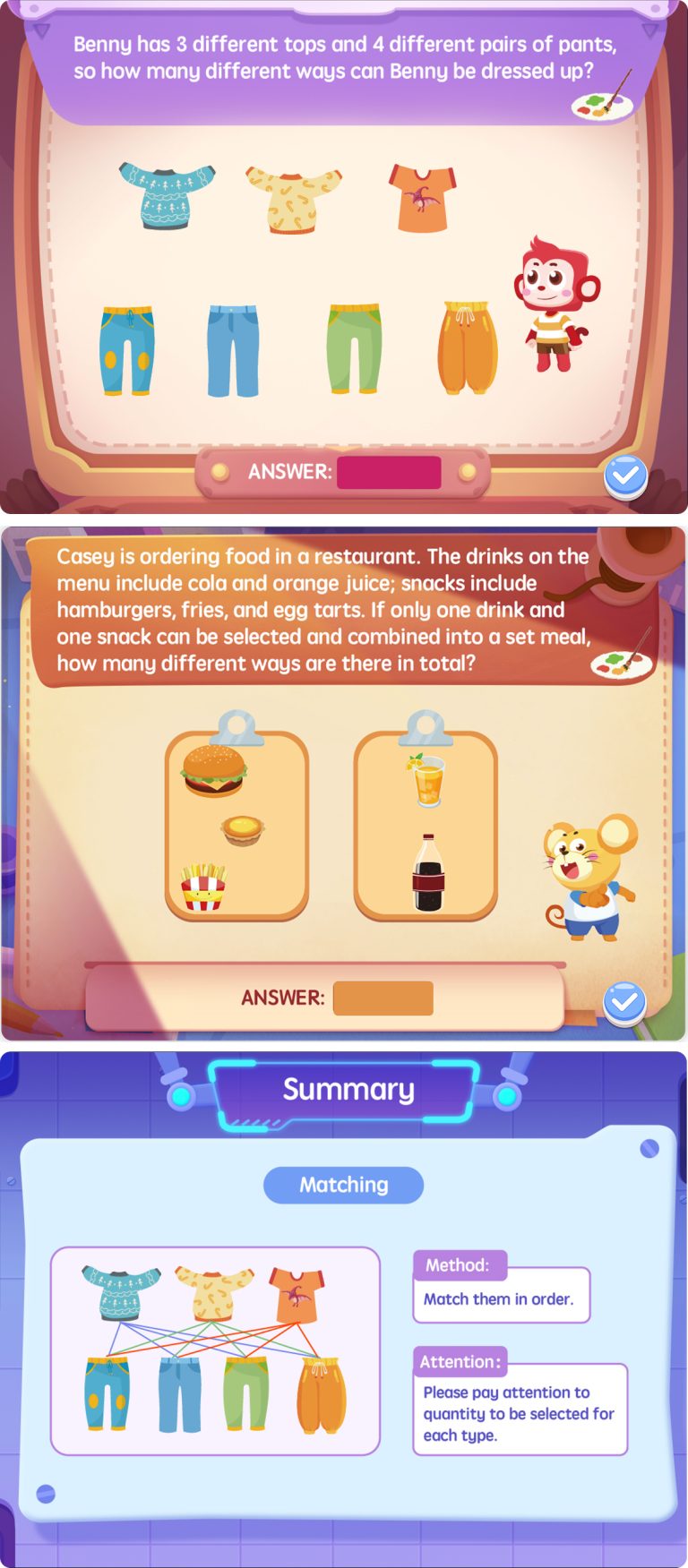
Counting & Combinatorics – Systematic counting in shapes, cubes, and structures.
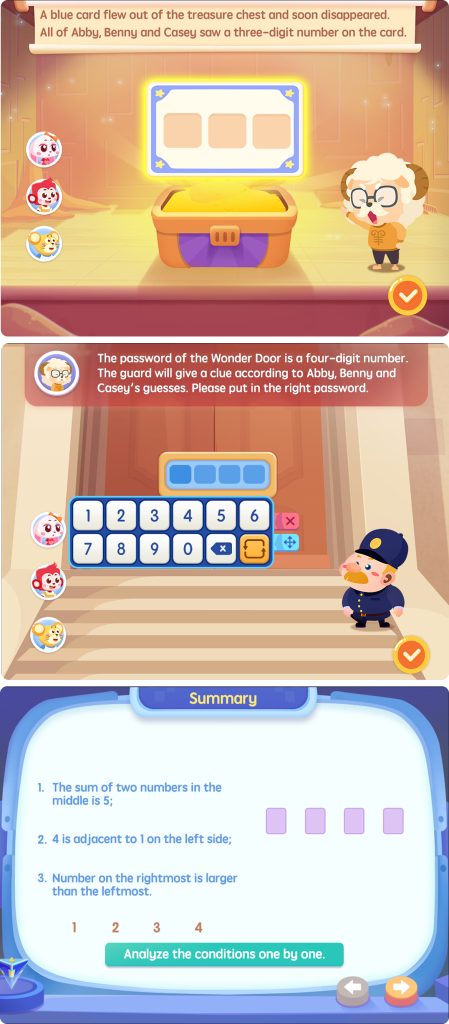
Mathematical Reasoning – Logic problems, tables, and code reasoning to develop structured thinking.
Competition Practice & Assessment – Regular contest-style problem practice with review and tests.
CP2 Learning Focus
Advanced Calculations – Long multiplication, long division, and efficient calculation strategies.
Logical & Puzzle Thinking – Grid puzzles, Sudoku, and pattern-based reasoning to strengthen analytical skills.
Advanced Word Problems – Model drawing, comparison problems, age problems, and working backwards.
Pattern Recognition & Algebraic Thinking – Figure patterns and number patterns that build early algebra skills.
Counting & Combinatorics – Enumeration, making lists, shortest path counting, and systematic problem-solving.
Number Sense & Operations – Magic squares, number puzzles, odd and even number applications.
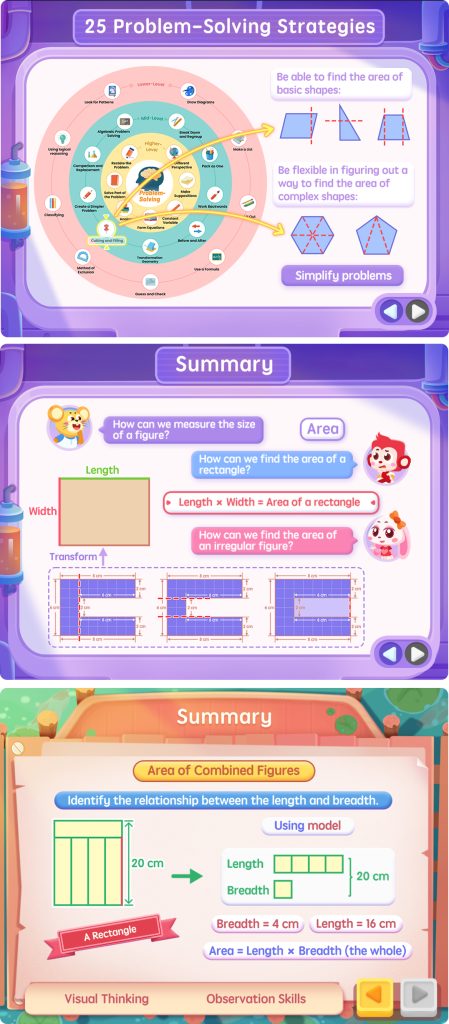
Applied Math Topics – Remainders, calendars, geometry (angles, perimeter, area), and practical math such as money and discounts.
Mathematical Logic & Reasoning – Table reasoning, assumption reasoning, code reasoning, and logical deduction problems.
Competition Problem Practice – Regular contest-style problems with review sessions and assessments.
CP3 Learning Focus
Advanced Calculations & Fractions – Efficient strategies for operations, fractions, and decimals.
Advanced Word Problem Solving – Interval, average, working backwards, age problems, and multi-step problems.
Geometry Foundations – Perimeter, area, triangles, and spatial reasoning with shapes.
Counting & Combinatorics – Enumeration methods, counting principles, and systematic problem-solving.
Number Sense & Mathematical Patterns – Magic squares, number matrices, and number puzzles.
Algebra & Equations – Linear equations, systems of equations, and ratios and proportions.
Distance, Time & Speed Problems – Travel, encounter, and chasing problems.
Logical & Competition Reasoning – Logical reasoning, inclusion–exclusion principle, and pigeonhole principle.
Competition Problem Practice – Regular contest-style problems with review and assessments.
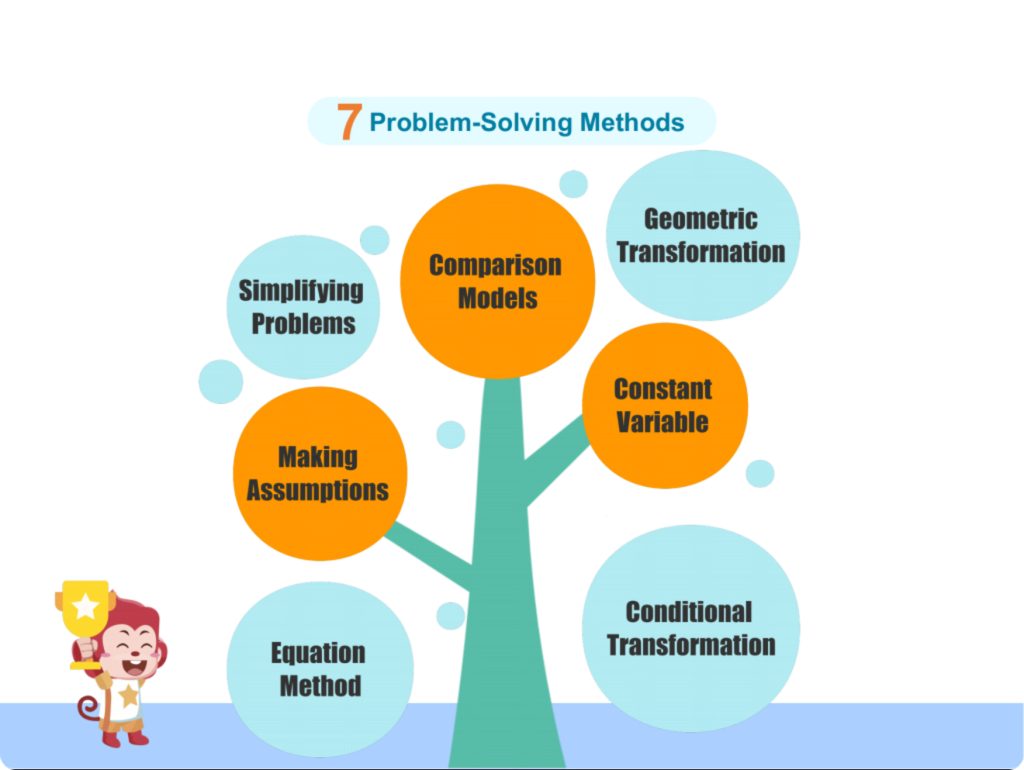
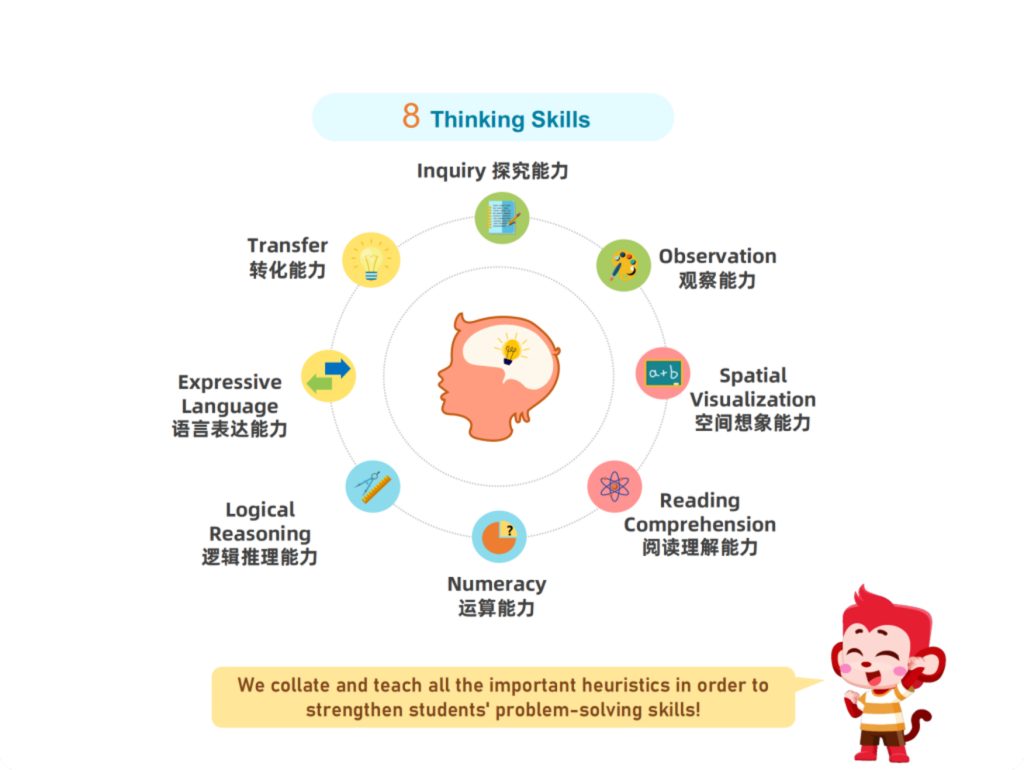
Our Teaching Approach
Our math program combines proven problem-solving strategies with the development of essential thinking skills. Students learn how to analyze problems, choose effective methods, and build strong mathematical reasoning and confidence.